
BANKPILOT
EU
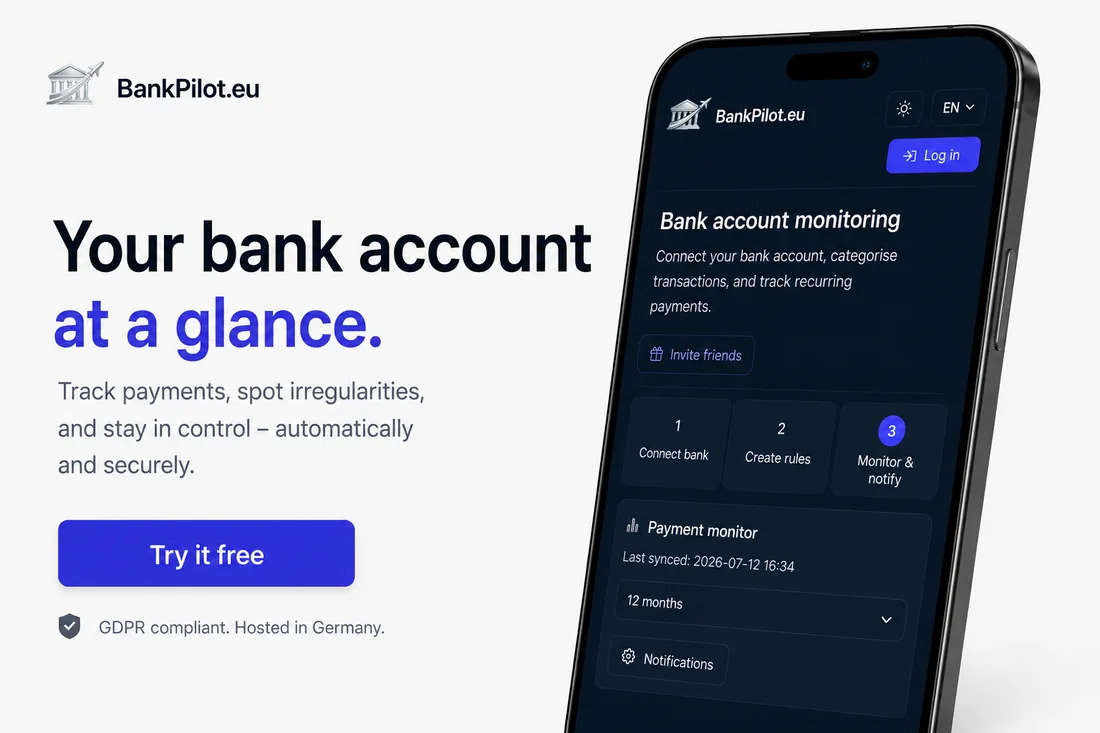
Between customer invoices, supplier direct debits, and the tax office, even experienced business owners can sometimes lose track of what is happening on their business account. BankPilot compares your planned payments with the actual account movements and alerts you as soon as something is missing or looks implausible.

For owner-managed businesses, trades, agencies, and SMEs without a large accounting department

Reliably match customer payments, supplier direct debits, and expected tax office items against your account statement

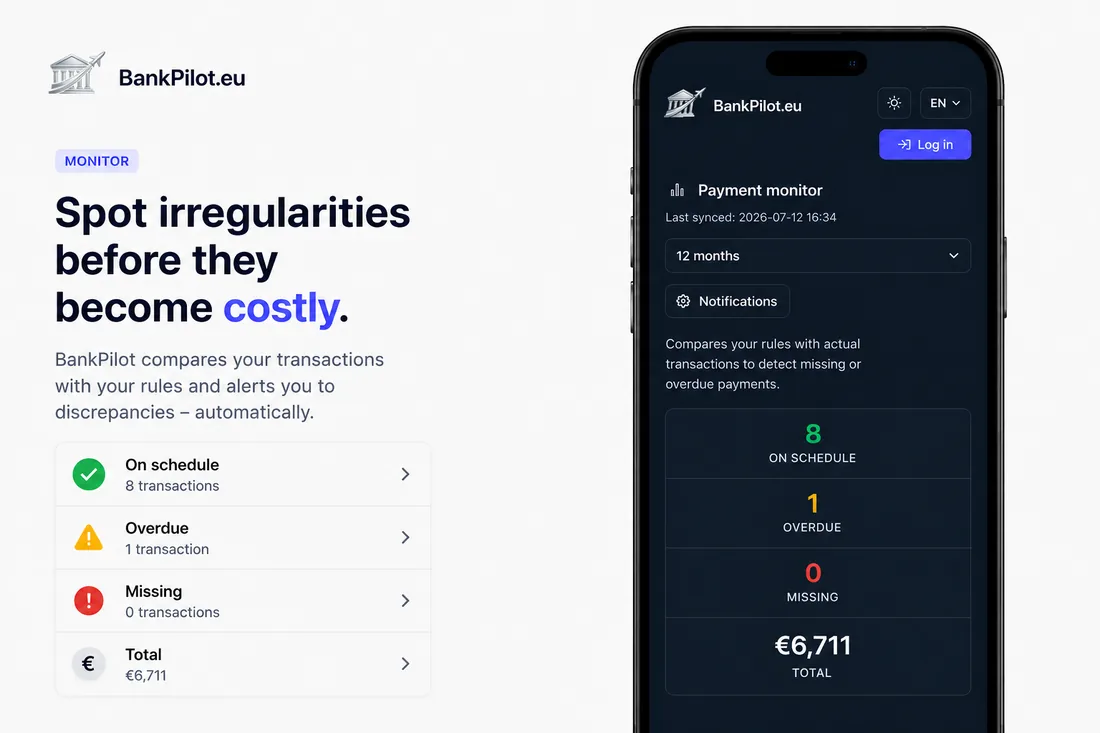
Get alerts when invoices, subscriptions, or direct debits do not appear as expected
 powered by
Incoming payment control for your business account, without additional accounting software
At a glance, you can see which payments were planned for the current period on your business account and which ones were actually posted, from customer invoices and recurring supplier direct debits to material purchases, tax refunds, and recurring fixed costs. Built for businesses and SMEs with predictable transactions.

Connect your business account securely, ready in minutes
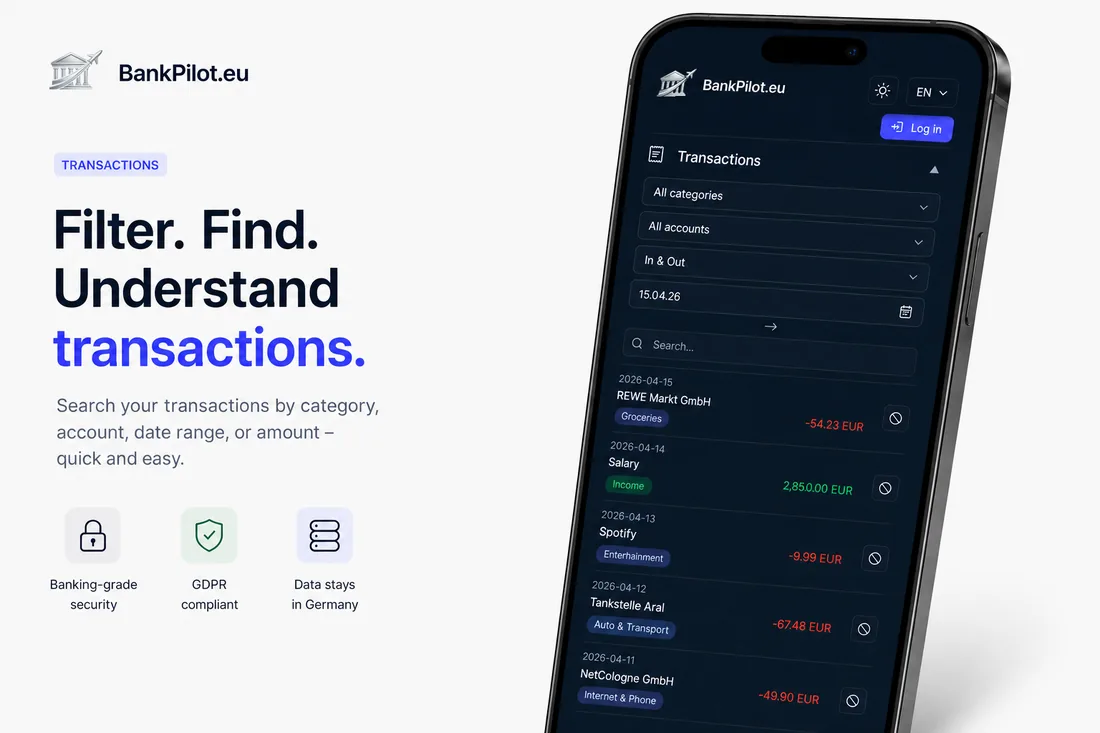
The connection runs through PSD2 Open Banking directly with your bank, with no CSV export and no external accounting software. Your online banking credentials stay with you. BankPilot only receives restricted read access to the transaction data needed for payment monitoring.
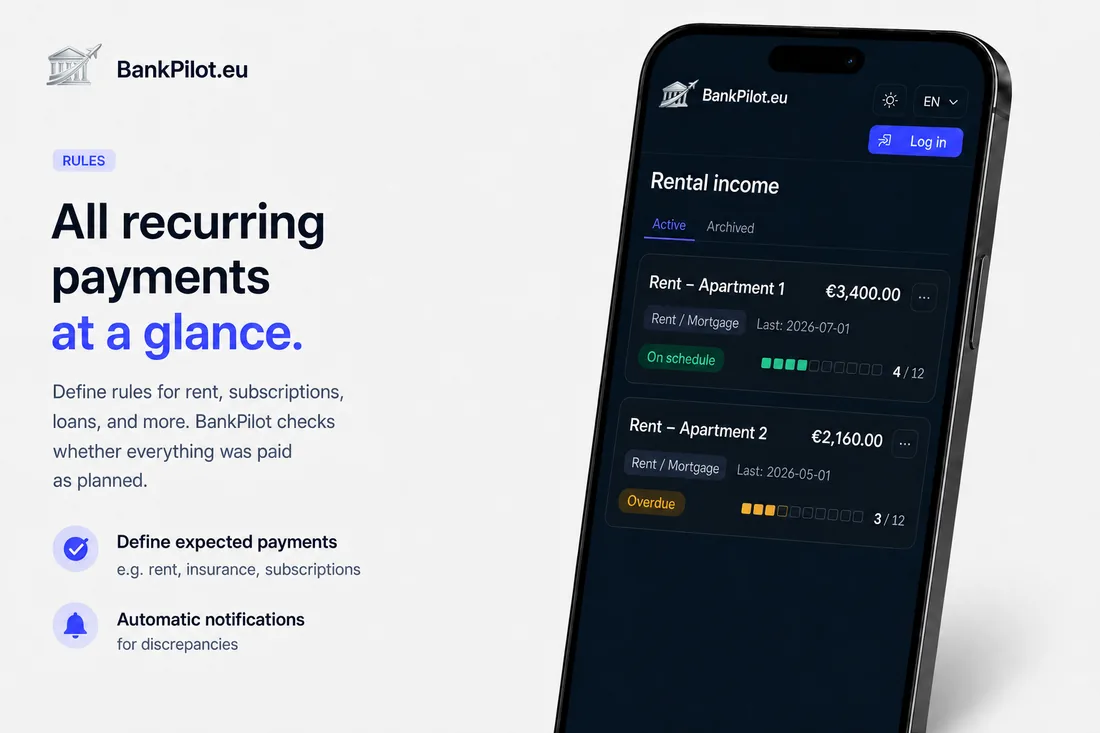
Enter expected payments once, matching runs automatically
"EUR 3200 from the tax office each quarter", "EUR 1800 materials direct debit every 15th of the month", "Fee from major client XY at month-end": you define these items once, then BankPilot matches them against the actual movements on your business account.
Open items and deviations, clearly summarized
Which customer invoice is still unpaid? Was there a duplicate supplier direct debit? Is an announced tax refund overdue? Instead of checking account statements every day, you get a reliable overview of outstanding and unusual transactions on your business account.
Matches payments even when the reference is unclear
Customers pay under different company names, suppliers change booking texts, and recurring items shift by a banking day or two. BankPilot still matches whether an expected payment arrived and only highlights real outliers or open cases.
Pricing
Simple and transparent
One price for your monitoring workflow. No extra fee per rule, invoice, or customer.
50% off for our first 100 customers
Join now and lock in 50% off your subscription for as long as it runs - applied automatically at checkout.
Join now with 50% offMonthly
- Business account monitoring included
- Recurring payment monitoring
- Matching powered by high-performance AI
- Alerts for missing or late payments
- Browser-first data storage with optional encrypted server sync
- Expected-vs-actual cash-flow view
Yearly
Same workflow. Better annual pricing.
- Business account monitoring included
- Recurring payment monitoring
- Matching powered by high-performance AI
- Alerts for missing or late payments
- Browser-first data storage with optional encrypted server sync
- Expected-vs-actual cash-flow view
Test whether your key business payments show up when they should. No commitment, no credit card.
Frequently Asked Questions
What can I monitor with BankPilot?
Typical use cases are payments received against invoices, recurring supplier direct debits, subscriptions, reimbursements, payouts, and generally any recurring transaction that should appear on your business account.
Is this accounting software?
No. BankPilot is a monitoring layer for expected bank transactions. It helps you see faster when money does not arrive or leaves differently than expected, without trying to replace your accounting.
Can I monitor more than one workflow?
Yes. You can create multiple recurring rules for different customers, suppliers, subscriptions, or operational payment flows within the same account view.
Is my banking data safe?
Yes. BankPilot connects via PSD2 Open Banking through Tink. Your login credentials are never shared with us. Data is encrypted in transit and at rest.
When is it worth it?
Usually from the point where missing or delayed payments create follow-up work: checking invoices, following up with debtors, reviewing supplier direct debits, or confirming whether something happened on time.